
How AI and ‘PropTech’ Are Changing Commercial Property Deals in Warwickshire and the West Midlands
Summary
Commercial property leases in England and Wales are being reshaped by technology. Smart meters, IoT sensors and AI-driven building management systems are now common in retail, office and industrial premises across Warwickshire and the West Midlands, but the legal framework governing repair, service charges and data ownership has not kept pace. Landlords and tenants negotiating heads of terms or settling disputes over dilapidations must now address questions that did not exist a decade ago, from who controls energy-consumption data to how predictive-maintenance systems affect repairing obligations under FRI and IRI leases.
Key points
• Energy suppliers are installing smart meters in non-domestic premises as part of government targets, creating new issues around data ownership, access rights and who pays for upgrades or replacements when systems become obsolete.
• IoT devices collect and share building performance data, including temperature, humidity, occupancy and energy use, but current lease templates rarely specify who owns this data or how it may be used.
• Dilapidations claims depend on the contractual terms of the lease; smart-building technology introduces new questions about fair wear and tear, supersession and the scope of repairing covenants when AI systems optimise performance.
• There is no legal requirement to use green lease clauses in the UK, and each lease is unique, but clauses governing smart systems and data sharing are becoming standard in modern commercial deals.
• Enterprise connected devices such as building entry systems, office cameras and environmental sensors pose cybersecurity risks that can give hostile actors access to entire networks if compromised.
A commercial landlord in Hinckley installs smart meters and occupancy sensors across a retail parade under refurbishment. The tenant’s FRI lease, drafted in 2019, says nothing about building management systems, data ownership or the cost of upgrading obsolete hardware. When the lease comes up for renewal, both sides discover that the existing wording does not fit the premises they are actually occupying. This disconnect is becoming common across Warwickshire and the West Midlands.
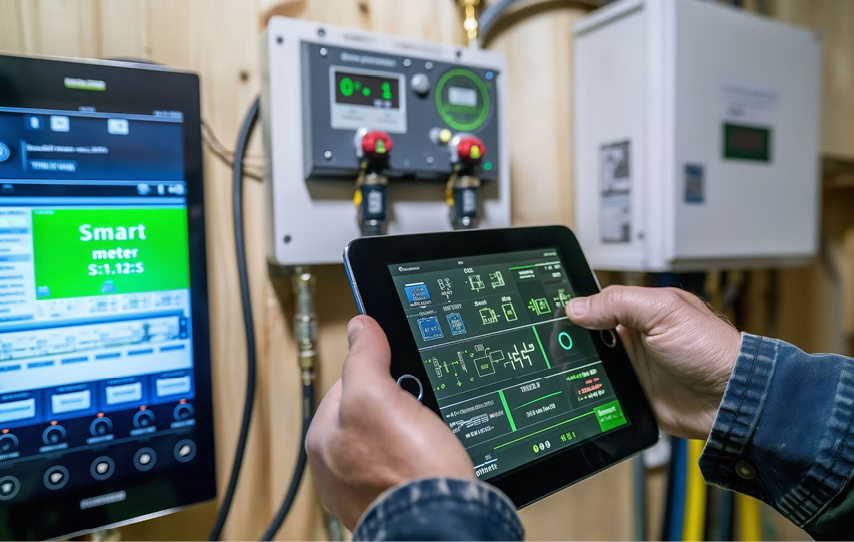
Large electricity supplies in England and Wales are required by energy supply licence conditions to have advanced meters fitted, and energy suppliers are working under a government targets framework introduced in January 2022, with non-domestic specific targets for 2024 and 2025. The result is that smart meters are now standard in most new or refurbished commercial premises, and IoT devices collect and share data with people or other devices, including smart meters and building sensors.
Who owns the building data and how may it be used?
IoT devices collect and share data with people or other devices and take action based on this information, including smart meters and environmental sensors. In commercial premises, that can mean half-hourly electricity readings, room occupancy patterns, footfall in retail areas, temperature and humidity logs, and real-time consumption data for heating, lighting, and refrigeration.
Since December 2022, non-domestic consumers of all sizes and their nominated third parties can request free access to up to 12 months of their historic smart or advanced meter energy use data from their energy supplier. But the data generated by sensors embedded in the building fabric itself, or by AI platforms that aggregate and analyse that data, is not covered by the smart metering data rules. Ownership and access rights depend on what the lease says, and most leases say nothing.
HM Land Registry processes personal information lawfully and securely in line with the Data Protection Act 2018 and UK General Data Protection Regulation, and values privacy and complies with data protection laws. Where building data includes personal information about occupiers, visitors, or employees, both the landlord and the tenant must comply with the UK GDPR, but the starting question remains contractual. Does the tenant control the data generated by its occupation of the premises, or does the landlord retain control because the sensors are part of the building fabric? A landlord planning to market the property to a new tenant may want aggregated energy and footfall data to support rental evidence; a tenant may regard its consumption patterns as commercially sensitive. Without express provision in the lease, that dispute goes to court.
How should leases allocate responsibility for installing, maintaining and upgrading smart systems?
Dilapidations claims relate to work required to remedy breaches of lease covenants, and the work required depends on the contractual terms of the lease and any other relevant documents. A tenant’s repairing obligation under a full repairing and insuring lease traditionally covers the structure, fabric and services. But where do smart meters, wireless sensors and AI-driven building management platforms fit?
If the lease defines “services” to include mechanical and electrical installations, the tenant may be responsible for maintaining or replacing a smart meter that has become obsolete or lost connectivity. Many IoT devices rely on the 2G network for connectivity, and Ofcom’s expectations of mobile providers during the 2G and 3G switch-off require planning for device upgrades. If the landlord has installed a proprietary building management system and the tenant’s repairing covenant covers “plant and equipment”, the tenant may find itself liable for software licences, system updates, or replacement hardware when the supplier discontinues the system.
The safer approach is to allocate responsibility explicitly in the lease. Does the landlord retain control of the building management system and recover the cost through the service charge? Or does the tenant assume the obligation in exchange for access to real-time consumption data and the ability to optimise energy use? In an internal repair-and-insure lease, where the landlord retains responsibility for the structure and common services, the landlord will usually control the smart infrastructure, but express wording helps avoid disputes over upgrade costs and data access.
Smart technology, ESG and green lease clauses
There is no legal requirement in the UK to have any form of green lease or green clause, and as such there is no widely used standard form of wording, with each green lease, clause or memorandum of understanding being unique depending on the type of property, the parties’ negotiating position and their ESG objectives.
Green leases contain a series of additional provisions that impose an obligation on the landlord and tenant to manage and reduce the environmental impact of a property through improvements, and tend to relate to commercial properties rather than residential properties. AI-driven heating, ventilation, and lighting optimisation can help landlords meet tightening energy-efficiency standards, but the tenant must cooperate by sharing access to the building and its consumption data.
Depending on the size of the property, the parties may agree to create a building management group that oversees implementation and compliance of green lease clauses; data sharing, efficiency monitoring and sharing meter data provides a greater understanding of energy, waste and water consumption, providing a benchmark for landlord and tenant to work from. A landlord with stronger negotiating power may seek the right to install or upgrade smart systems unilaterally if it reasonably believes this will improve environmental performance; a tenant may insist that the landlord cannot install any system that would worsen the property’s energy performance rating without the tenant’s prior consent.
Examples might include a clause requiring the tenant to grant the landlord access to smart meter and sensor data every month for the purpose of energy reporting; a clause requiring the parties to meet quarterly to review consumption data and agree energy-reduction measures; or a clause allowing the landlord to install additional sensors or metering equipment on reasonable notice, with the cost recovered through the service charge if the improvement meets specified environmental standards.
Practical action points for local businesses and investors
For landlords:
• Before installing smart meters, IoT sensors or AI building management systems, review the standard form lease to confirm that data ownership, access rights and upgrade obligations are dealt with expressly.
• Where premises are let on FRI terms, specify whether smart infrastructure is included in the tenant’s repairing covenant or retained by the landlord with cost recovery through the service charge.
• In green lease clauses, state what data the tenant must share, how often, and for what purpose, and confirm that sharing the data does not breach UK GDPR.
• Address cybersecurity obligations: if the landlord controls the building platform, warrant a minimum security standard; if the tenant controls its own systems, require compliance with standards such as Cyber Essentials.
For tenants negotiating heads of terms:
• Ask whether the premises include smart meters, sensors or building management systems, and request sight of user manuals, data-sharing policies and software licences before exchange.
• Where the lease requires the tenant to maintain or replace smart infrastructure, establish the current lifecycle of the equipment, the cost of replacement, and whether alternative systems are available.
• Confirm who owns consumption and occupancy data generated by the building, whether the tenant may share it with third parties (such as energy consultants), and whether the landlord may use it for marketing or benchmarking.
• If the premises are subject to green lease obligations, check that data-sharing and access requirements are proportionate and do not impose ongoing costs that are not reflected in the rent or service charge.
Final words
Smart meters and AI may be new, but the underlying legal questions are the same as they have always been: what does the lease require, what risks does each party bear, and how should those risks be allocated fairly at the outset? If you are negotiating heads of terms for commercial premises with smart infrastructure, reviewing a dilapidations schedule that includes claims for obsolete sensors or building management systems, or drafting or reviewing green lease clauses that require data sharing or system upgrades, Cocks Lloyd’s commercial property team can ensure the lease reflects the reality of how the building operates and protects your position if technology fails or becomes outdated.
Frequently asked questions
Who owns the data generated by smart meters and IoT sensors in commercial premises?
Energy suppliers must provide non-domestic consumers and their nominated third parties with free access to up to 12 months of historic smart meter energy use data on request since December 2022. Data generated by other IoT sensors embedded in the building is not covered by those rules. Ownership depends on the contractual terms of the lease. If the lease is silent, disputes over data ownership and access rights will be resolved by the court applying general property and data protection principles. It is safer to deal with the issue expressly in the lease or a side letter.
Can a landlord install smart building systems in premises let on a full repairing and insuring lease without the tenant’s consent?
That depends on the wording of the lease. If the lease grants the landlord the right to install additional plant or equipment in the common parts or the demised premises, the landlord may exercise that right, but must still act reasonably and in accordance with the tenant’s quiet enjoyment of the premises. A landlord with a stronger negotiating position may seek to ensure that the lease permits them to make unilateral improvements to the property if they reasonably believe this will improve its environmental impact. If the lease does not give the landlord that right, the tenant’s consent will be required.
If a smart meter or building sensor fails and results in a loss, who is liable under an FRI lease?
Dilapidations are works of repair or reinstatement for which a tenant is liable, and the required work depends on the lease’s contractual terms and any other relevant documents. If the lease defines the tenant’s repairing obligation to include mechanical and electrical installations and plant, and the smart meter or sensor forms part of those installations, the tenant may be liable for repair or replacement. If the failure was caused by a cyberattack on a building management system controlled by the landlord, the tenant may argue that it could not have prevented the breach, and the loss should fall on the landlord. Allocation of liability for system failure and consequential loss should be addressed expressly in the lease.
Do green lease clauses requiring smart meter data sharing comply with UK GDPR?
Yes, if the data is aggregated and anonymised so that it does not identify individuals. HM Land Registry processes personal information lawfully and securely in line with the Data Protection Act 2018 and UK General Data Protection Regulation. If the data includes personal information about occupiers or visitors, both landlord and tenant must comply with UK GDPR. The lease should specify what data is shared, for what purpose, and confirm that both parties will comply with data protection law.
Can a landlord recover the cost of AI-driven predictive maintenance platforms through the service charge?
That depends on whether the expenditure falls within the service charge provisions of the lease. If the lease allows the landlord to recover the cost of maintaining, repairing or improving services to the building, and the platform is used for that purpose, the cost may be recoverable. Payments by the tenant for work to maintain or repair leased premises which the lease does not require the tenant to carry out are treated as rent, and the amounts received by the landlord are taxable in full. A tenant may challenge the expenditure as an improvement rather than maintenance, or argue that the platform benefits the landlord’s wider estate and should be apportioned accordingly.
How does section 18 of the Landlord and Tenant Act 1927 apply to smart building systems in a dilapidations claim?
Section 18 of the Landlord and Tenant Act 1927 provides that where the landlord has a settled intention to demolish or substantially redevelop the property, the tenant’s dilapidations liability may be significantly reduced because of the economic waste of repairing a building the landlord intends to demolish. If AI data shows that replacement of a system is more cost-effective than repair, or that the landlord intends to upgrade the building management platform as part of refurbishment works, the tenant may argue that section 18 limits recovery to the landlord’s actual loss. The quantified demand should be restricted to the landlord’s likely loss, which is not necessarily the same as the cost of works to remedy the breaches.
Talk to Cocks Lloyd
If you are negotiating a commercial lease that involves smart meters, IoT sensors or AI building management systems, or you are facing a dilapidations claim that includes obsolete technology, please phone us on 0247 6641642 or fill in our contact form, and we will get back to you as quickly as possible.
![Chamber Commerce [company-city] Logo](/wp-content/uploads/2022/09/chamber-of-commerce-logo.png)